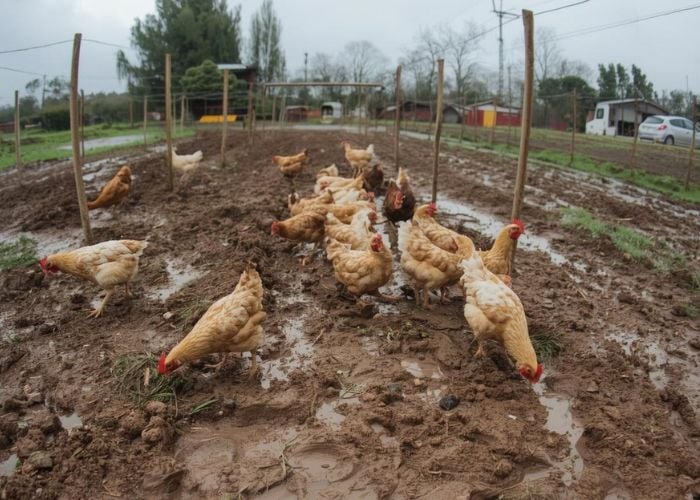
Spring is a great time for chickens. The weather warms up, grass grows again, and chickens love to explore outside.
But spring also brings rain. And rain can turn your chicken run into a muddy mess.
Too much mud is not good for chickens. It can make the run dirty, smelly, and unsafe.
Mud can also spread germs and make it harder for chickens to walk around.
That is why learning mud management tips for chicken runs in spring is so important.
With a few simple steps, you can keep your chicken run cleaner and safer during rainy weather.
Spring Mud Management: Why Mud Is a Problem in Chicken Runs
Before learning mud management tips for chicken runs in spring, it helps to understand why mud is such a big problem.
When rain falls on bare dirt, the ground becomes soft and wet. Chickens scratch and dig in the soil.
This breaks up the ground even more. Soon, the area turns into thick mud.
Mud can cause problems like:
- Dirty feathers
- Bad smells in the run
- More bacteria and germs
- Slippery ground
- Foot problems like bumblefoot
A muddy run also attracts flies and pests. That is why managing mud is an important part of chicken care during spring.
Mud Management for Chicken Runs
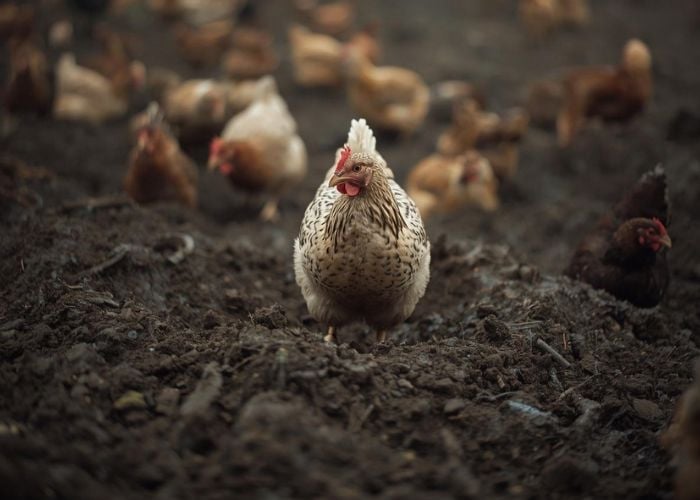
Add Ground Cover to the Chicken Run
One of the best mud management tips for chicken runs in spring is adding ground cover.
Ground cover helps absorb water and keeps the soil from turning into mud.
Good ground cover options include:
- Wood chips
- Straw
- Pine shavings
- Dry leaves
- Bark mulch
Wood chips are one of the best choices. They soak up water and last a long time.
Chickens also love scratching through them.
Tips for using ground cover:
- Spread 3–6 inches thick
- Add more after heavy rain
- Replace when it breaks down
This simple step can greatly reduce mud in your run.
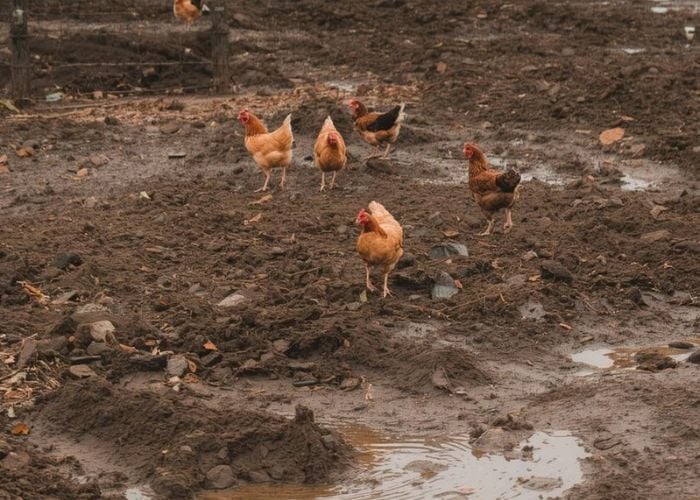
Improve Drainage in the Run
Poor drainage is a big reason chicken runs get muddy. If water cannot drain away, it collects in the run.
Another helpful tip for mud management in chicken runs in spring is improving drainage.
Ways to improve drainage:
- Build the run on slightly raised ground
- Dig shallow trenches for water to flow away
- Add gravel under problem areas
- Slope the ground slightly
Even a small slope can help water flow away rather than sit in the run.
Better drainage keeps the soil from staying wet for long periods.
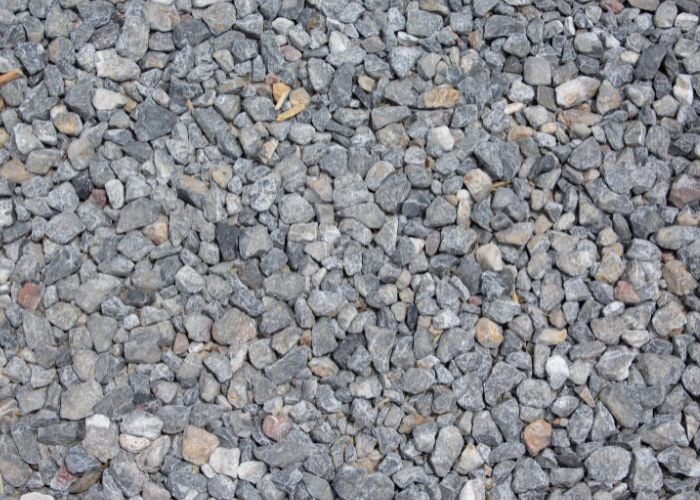
Use Gravel in High Traffic Areas
Chickens walk in the same areas every day. These spots often become muddy first.
Important places include:
- Near the coop door
- Around feeders
- Near water containers
- In shaded corners
Adding gravel is one of the most effective mud management tips for chicken runs in spring.
Gravel helps because it:
- Allows water to drain quickly
- Prevents deep mud
- Creates a solid walking surface
To use gravel:
- Lay landscape fabric first.
- Add a layer of gravel on top.
- Spread evenly across the area.
This keeps the ground firm even during rainy weeks.

Move Feeders and Waterers Often
Another easy mud management tip for chicken runs in spring is to move feeders and waterers around.
When chickens gather in one spot all the time, they scratch the ground bare. This makes the soil soft and muddy.
Moving feeders helps because:
- Chickens spread out more
- Ground gets time to recover
- Mud spots do not form as quickly
Tips:
- Move feeders every few days
- Use hanging feeders if possible
- Place water containers on raised platforms
These small changes help protect the ground.
ALSO READ: How To Make A DIY No-Mess Chicken Feeder
Build a Covered Chicken Run
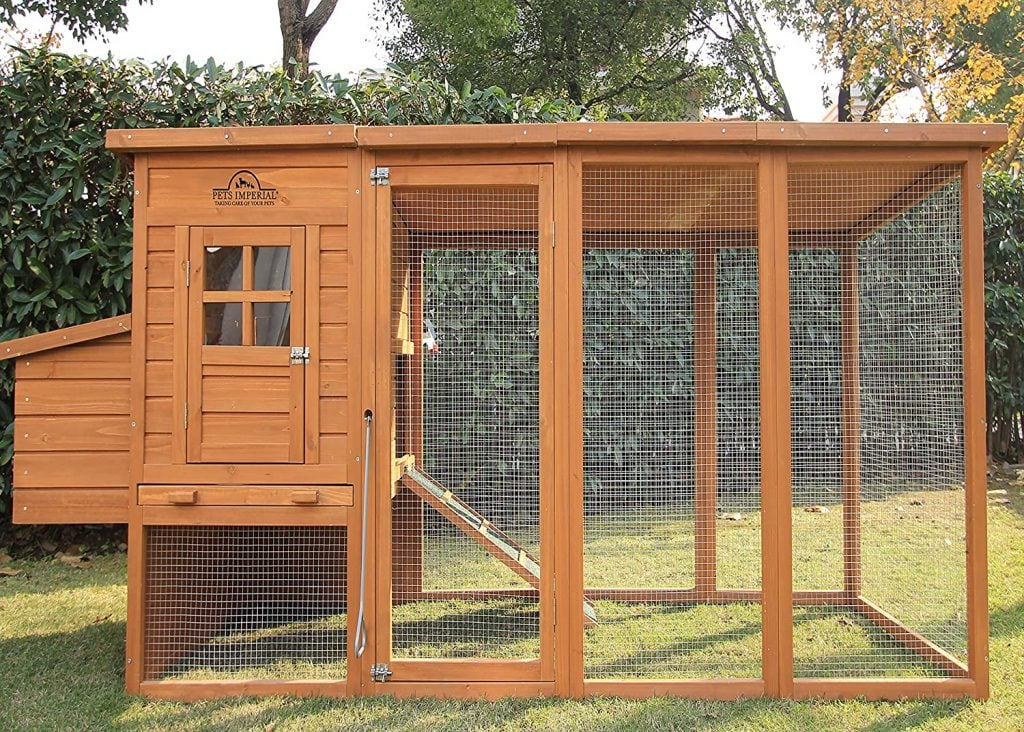
Rain is the main cause of mud. Keeping rain out can make a huge difference.
One of the smartest mud management tips for chicken runs in spring is adding a roof or cover.
Good covering options include:
- Clear plastic roofing panels
- Tarps
- Metal roofing sheets
- Shade cloth with waterproof lining
Benefits of covering the run:
- Keeps the ground dry
- Reduces mud problems
- Provides shade for chickens
- Protects feed from rain
Even covering part of the run can help a lot.
ALSO READ: 6 Best Chicken Run Roof Ideas + (1 Bad Idea)
Try the Deep Litter Method Outdoors
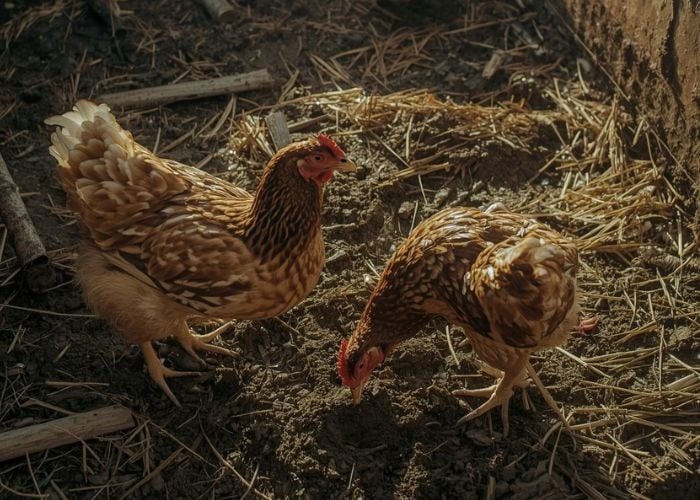
Many chicken keepers use the deep litter method inside the coop. But it can also work in the run.
This is another useful tip for mud management in chicken runs in spring.
The deep litter method works like this:
- Add thick layers of bedding
- Chickens scratch and mix it
- Old layers break down slowly
Good materials include:
- Wood chips
- Dry leaves
- Pine shavings
- Straw
Benefits include:
- Absorbing moisture
- Reducing mud
- Creating natural compost
This method works best when the bedding is deep and regularly refreshed.
ALSO READ: What Is The Deep Litter Method?
Add Plants Around the Run
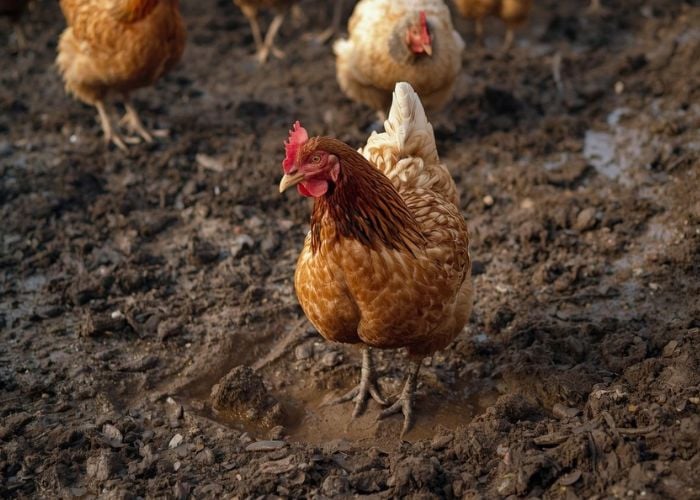
Plants help control mud in many ways. Their roots hold the soil together and absorb extra water.
Planting around the run is a helpful mud management tip for chicken runs in spring.
Good plants include:
- Hardy grasses
- Clover
- Bushes outside the fence
- Fast-growing shrubs
Benefits of plants:
- Improve drainage
- Reduce soil erosion
- Provide shade
- Make the run look nicer
Just be careful not to plant toxic plants where chickens can eat them.
ALSO READ: Herbs for Chickens: How I Use Herbs in My Coop
Rotate Chicken Run Areas
If you have space, rotating runs is one of the best mud management tips for chicken runs in spring.
This means giving chickens different outdoor areas at different times.
Benefits include:
- The ground gets time to dry
- Grass can grow back
- Mud does not build up as quickly
Simple rotation ideas:
- Use movable fencing
- Create two separate runs
- Move portable chicken tractors
Giving the ground time to recover keeps it healthier.

Clean Muddy Areas Regularly
Even with good planning, mud can still happen. That is why regular cleaning is important.
Part of good mud management tips for chicken runs in spring is checking the run often.
Look for:
- Wet puddles
- Bad smells
- Thick mud patches
When you find problem spots:
- Add fresh bedding
- Spread dry wood chips
- Improve drainage if needed
Small fixes early prevent bigger problems later.
ALSO READ: How to Clean and Disinfect a Chicken Coop
Signs Your Mud Problem Is Improving
When your mud management plan works, you will notice improvements.
Look for these signs:
- Less standing water
- Cleaner chicken feet
- Less smell in the run
- Healthier ground surface
Using several mud management tips for chicken runs in spring together usually works best.
Spring Mud Management for Chicken Runs: Before You Go…
Spring rain is good for gardens, but it can cause trouble in chicken runs.
Too much mud makes the run messy and unhealthy for your flock.
The good news is that mud problems are easy to fix with a little planning.
By using these mud management tips for chicken runs in spring, you can keep your run cleaner and safer.
With these simple steps, your chickens can enjoy the fresh spring weather without turning their run into a muddy swamp.