
Mealworms! Shake that packet and chickens come running from every corner of the yard. Chickens love dried mealworms, no doubt about it. But should you be feeding them to your flock? It really depends on the supplier.
As always, higher quality ones are more expensive but in terms of your flock’s health, it’s definitely worth it.
This article discusses the benefits of feeding your chickens dried mealworms. It also explains how many you should feed your chickens, how to spot inferior mealworms, and much more…
Dried Mealworms: Best Treats For Egg Laying Chickens
No products found.
7 Reasons to Feed Your Chickens Dried Mealworms
So you have decided to ‘grow your own or have found a reputable source of mealworms for your flock. Why should you feed them to your girls?
Training Your Birds With Dried Mealworms
You can train chickens to do amazing things, especially when they are rewarded with mealworms!
People have used ‘bribery by treats’ to teach hens to run obstacle courses, do a variety of tricks and even modify some anti-social behaviors.
It is also the easiest way to get reluctant teenage hens into the coop. They would rather have a snack than party outside.
Chickens are intelligent and can easily be trained to do things as long as there is a reward at the end, after all, no one works for free!
Dried Mealworms Are Good For Feathers
 The most useful time of the year to feed mealworms is around the time of the molt.
As you all know, the molt depletes a huge amount of protein from the bird.
Through the stress of molting, the high amount of protein used in replacing the old feathers and the strain of maintaining health is enormous.
Although your birds will get through the molt without high protein snacks, they do need extra protein from somewhere, so why not give them a special treat to brighten up the day for them?
You can give other high-protein snacks too during this period but use common sense, please. Use your high protein snacks interchangeably – perhaps hard-boiled and mashed egg one day, then mealworms the next, and pumpkin seeds on the third.
Variety is the spice of life!
Mealworms Used as Medicine
If you have a hen that’s poorly, recovering from an infection or predator attack, she will need some extra protein to help repair any damaged tissue.
It would be acceptable under these circumstances to give her a teaspoon of them daily. The only exception to this is if there is a question of impaired kidneys; in which case, keep the protein at 16 – 18% layer feed.
Dried Mealworms Review Table
| DRIED MEALWORM / BSF | SIZE | NON-GMO | OUR RATING |
|---|---|---|---|
| Appetizing Mealworms | 1 lb | Yes | See Price |
| PTCom – Bulk Dried Mealworms for Chickens | 10 lbs | No | See Price |
| Hatortempt – Dried Mealworms for Chickens | 5 lbs | Yes | See Price |
| MBTP – Bulk Dried Mealworms (Treats for Chickens) | 5 lbs | No | See Price |
A Simple Treat of Mealworms
If the truth is told, we all like to be spoiled at times. We are no different with our hens – they deserve treats for laying those beautiful eggs almost every day.
There is nothing wrong with spoiling your girls – as long as it is in moderation.
If you feed your girls too many treats they will pack on the pounds; obese chickens lay fewer eggs and have more problems with laying.
Keep it healthy, a beakful once or twice a week is sufficient; don’t listen to what the hens tell you!
Feeding Tip: For a summertime treat, makes some mealworm ice cubes. Put just a few in the cube tray, you can sprinkle in some herbs or grains too if you wish and freeze.
Set them out in a pan in the shade and the hens will be busy for a while pecking at those refreshing treats.
They are delicious! No, I haven’t tried them but my head hen Ms. Crabby says they are to die for!
Increase Chickens Protein With Mealworms
They are packed full of protein which all living creatures need. However, too much protein can be unhealthy too. It can cause kidney problems for your ladies, as can too much calcium in the diet so moderation is best.
With 50% protein when dried and 30% protein when they are alive, they are packed with protein.
The protein content of live worms is slightly less worrisome from the health point of view. However, dried ones aren’t a problem if fed in moderation.

Tossing Mealworms In the Coop Keep Chickens Healthy and Active
You can encourage your hens to work for their protein by tossing them into the bedding and watching them re-arrange the coop.
This will keep them busy for ages as they probe and peck every corner of the coop just in case they missed one. Nothing like getting the kids to clean out their room!
How much?
I have 20 hens in one coop so I toss in a small handful scattering them as widely as I can.
How to Feed Dried Mealworms to Your Chickens
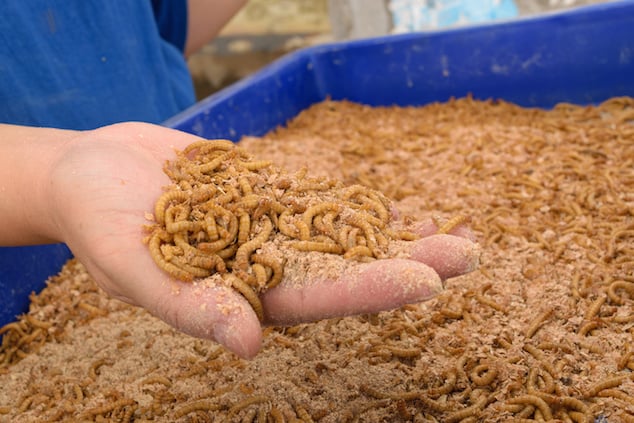
You have a few options when feeding them to your chickens.
I like to use it to help turn the coop bedding over. Just toss some into the bedding and your hens will go crazy rummaging through the bedding. It also helps make them last longer as it can take them some time to find them buried within the bedding.
If you don’t want their bedding turned over, you can also just toss it onto the ground outside and watch them demolish them in record time.
Finally, if you have extremely friendly hens you might even be able to feed them from your hand.
As for how many dried mealworms you can feed them and how often…
Treats should make up no more than 10% of your hen’s daily food intake. So a beakful or two of dried in a day is more than enough.
However you should make sure to switch up the treats, so only give them mealworms twice a week maximum.
Dried Mealworms Alternatives
When mealworms grow up they become Darkling beetles. You probably don’t want them near your henhouse since they are possible carriers of the disease (they have been linked to Marek’s Disease).
Because of this, some enterprising folks have turned to raising crickets or dubia. I’m sure you all know what cricket is, but what is a dubia?
A dubia is a… cockroach!
It’s a tropical cockroach that is packed full of protein and not quite as dreadful as a regular cockroach.
Apparently, these little fellows are very peaceful and live harmoniously with each other, unlike Darkling beetles that will eat each other.
They are also much quieter than a room full of crickets.
If you’re looking for more treat suggestions read our definitive list of chicken treats here.
Dried Mealworms Summary
We have given you a few excuses to spoil your hens rotten but remember, like chocolate for humans, too many have a downside.
That applies to not only mealworms but any high-protein snacks – be it seed, egg, or insect.
If you have a few chickens and lots of time, training them to do tricks is an enjoyable pastime for you and the hens. You will amaze your friends with your smart hens!
Have you managed to train your hens with treats? Let us know in the comments section below…
Best Treats For Egg Laying Chickens
No products found.

Disclosure: We may earn affiliate commissions at no cost to you from the links on this page. This did not affect our assessment of products. Find full disclosure here.


I have not received any e-mails lately, I love your articles and miss them, please send me more. I am raising 10 chickens what a blast.
Hi Pete,
Please send me an email and I will make sure you’re still subscribed to our mailing list 🙂
Claire
Please add to your email distro
Please subscribe to our newsletter by going to the bottom of our website and submitting your email.
Thanks!
Claire
Loved reading this article & want to read more ~ I don’t want to miss out on any further articles hence (excuse the pun) me signing up
Debs
I have 09 chicken
Great article and helpful info. We are integrating two young flocks together and the meal worms have helped them mingle.
I buy the suet blocks for birds and feed to the chickens occasionally as a treat. They love the peanut butter and mixed berry ones. They usually wipe out the hanging feeders in a day.
Hello! Great article, however I was specifically looking for how to spot inferior mealworms as stated at the beginning but I didn’t see that in the article. Did I miss it?
Thanks for all the excellent content!
Maybe this article will help you: https://www.thehappychickencoop.com/mealworms-vs-black-soldier-fly-larva/
How do you spot inferior mealworms? I tried to find that information in the article – did I miss it? Thank you.
Maybe this article will have what you need https://www.thehappychickencoop.com/mealworms-vs-black-soldier-fly-larva/